
Does GLP-1 Cause Hair Loss? Why It Happens and What You Can Do
GLP-1 medications have become one of the biggest conversations in health and wellness, and lately, they’ve become a big conversation in my trichology practice, too. Clients taking medications such as semaglutide and tirzepatide are asking me the same question: “How do I know if my GLP-1 is causing hair loss?”
The answer isn’t as simple as “GLP-1s cause hair loss.” Research has found a connection between some GLP-1 medications and hair shedding, but we’re still learning whether that’s because of the medication itself, rapid weight loss, eating less, nutritional changes, or a combination of factors. From a trichology perspective, the good news is that there are several ways to be proactive.
Why Can Hair Loss Happen While Taking a GLP-1?
GLP-1 medications can significantly reduce appetite, so some people eat fewer calories, get less protein, and receive fewer essential nutrients while also losing weight quickly. When the body doesn't get enough energy or nutrition to support its usual functions, hair growth becomes a lower priority. More hair follicles can shift out of their active growth phase and into a resting phase, eventually leading to increased shedding.
This is known as telogen effluvium, a temporary type of hair loss that can occur after significant weight loss, nutritional changes, illness, stress, or other major changes in the body. The American Academy of Dermatology has noted that researchers are still determining whether GLP-1 medications directly affect hair growth, but rapid weight loss and reduced nutritional intake are currently considered important possible contributors to the shedding some patients experience.
Why GLP-1 Hair Loss Can Start Months After Taking the Medication
Telogen effluvium can be confusing because your hair doesn’t always react right away. A physical change may push more follicles into their resting phase, but the increased shedding may not become obvious until two or three months later. That means you might start a GLP-1, lose weight over time, and then suddenly wonder why more hair than usual is coming out in the shower. The timing can make it difficult to connect the two.
Fortunately, telogen effluvium is usually temporary, and hair often begins recovering once the body adjusts and the underlying trigger improves.

How Protein Can Help Prevent Hair Loss on a GLP-1
One of the first things I talk about with clients taking GLP-1s is protein. Hair is made largely from a protein called keratin, and your body needs dietary protein to keep producing it. When your appetite drops dramatically, it becomes surprisingly easy to eat far less protein than your body was getting before.
Your body is also very practical. If it feels that nutrients or energy are limited, it’s going to prioritize your heart, brain, muscles, and other essential systems before it worries about growing beautiful hair. This is why I encourage clients to think about the quality of what they’re eating, not simply how little they’re eating.
If eating enough has become difficult, talk with your prescribing provider or a registered dietitian about what adequate protein and nutrition should look like for you.
What Vitamins to Take for GLP-1 Hair Loss
Hair follicles also depend on nutrients such as iron, vitamin D, zinc, vitamin B12, and others. When someone is eating much less than they did before starting a GLP-1, deficiencies can become one piece of the hair-loss puzzle.
But please don’t panic-buy every hair vitamin on the internet. More supplements do not automatically equal more hair. If shedding becomes significant, it may be helpful to speak with your physician about bloodwork that can identify possible deficiencies. As a double board-certified trichologist, I would much rather know what your body actually needs than guess based on a trending supplement. That’s why personalized care is so important. Everyone’s bodies and needs are different.
Why Scalp Health Matters When Taking a GLP-1
Hair loss conversations tend to focus so heavily on the strands that we forget where those strands actually come from: the scalp.
Your scalp is home to your hair follicles, so keeping that scalp microbiome healthy matters whether you’re taking a GLP-1 or not. Persistent itching, burning, tenderness, redness, heavy flaking, or buildup shouldn’t automatically be blamed on your GLP-1. Those symptoms may signal a separate scalp issue that needs attention.
This is one reason a scalp analysis can be so helpful. Using a dermatoscope, I can look much more closely at the follicles, hair density, miniaturization, inflammation, scaling, and other changes that you may not be able to see yourself. Then we put those findings into context with your diet, health history, medications, weight-loss timeline, stress, family history, and bloodwork when available.
Minoxidil and Peptides for GLP-1 Hair Loss
Using minoxidil or peptides while taking a GLP-1 may help with hair loss, but it really depends on why you’re shedding and what your follicles need.
Topical minoxidil is a medication applied to the scalp that helps keep hair follicles in their active growth phase longer, encouraging thicker, fuller growth. It’s most commonly used for pattern hair loss and may be helpful if GLP-1-related shedding has made underlying thinning more noticeable. But if your shedding is mainly from rapid weight loss or nutritional changes, those triggers need attention, too.
Peptides are small chains of amino acids found in many scalp serums and treatments. They can help support the scalp and create a healthier environment for hair growth, so I may incorporate them into a broader hair and scalp routine. They aren’t a cure for GLP-1-related shedding, though.
I don’t believe in throwing every popular hair-growth product at the problem and hoping something works. Minoxidil, peptides, nutrition, scalp care, or a combination may help. The key is figuring out what your follicles are asking for first.
How to Be Proactive About Your Hair on a GLP-1
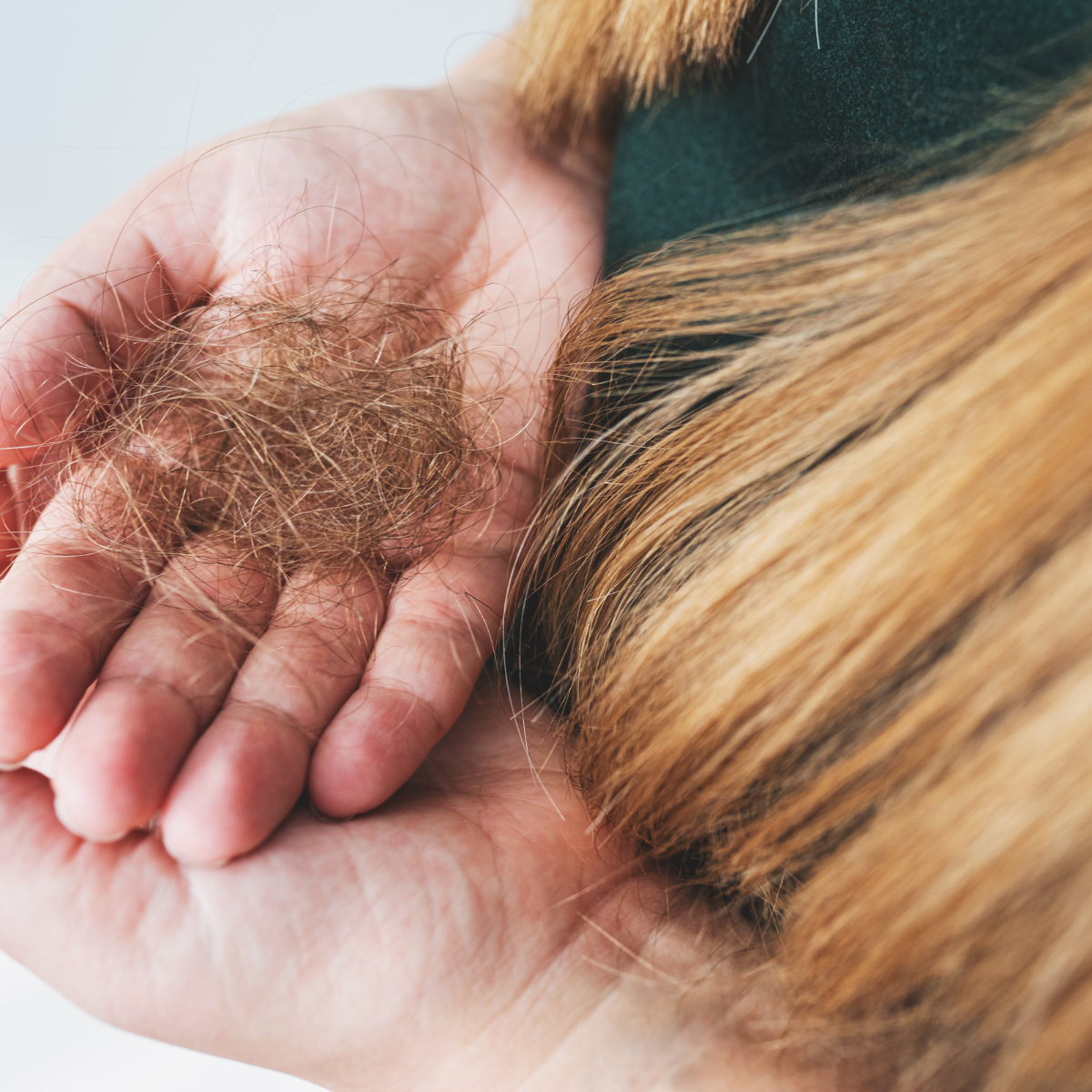
You don’t have to wait until your shower drain is full of hair to start paying attention. If you’re beginning a GLP-1, notice what your hair and scalp look like now. Make protein and balanced nutrition a priority, stay hydrated, avoid unnecessarily extreme calorie restriction, and pay attention to changes in shedding, density, or scalp comfort. If you already have thinning hair or a family history of hair loss, getting a scalp analysis can also make future changes easier to recognize.
GLP-1 medications can offer significant health benefits, and hair loss needs to be looked at within the bigger picture.
How Trichology Can Help With GLP-1 Hair Loss
Not everyone taking a GLP-1 will experience hair loss, and not every person who sheds while taking one is shedding for the same reason. That’s where trichology comes in.
My job is to look at the clues. Is the shedding diffuse? Are the follicles miniaturizing? Is the scalp inflamed? Has nutrition changed dramatically? Did the hair loss begin a few months after rapid weight loss? Was thinning already happening before the medication?
Sometimes the answer is simple. Sometimes several things are happening at once. And sometimes what I see tells me it’s time to involve a dermatologist or physician for additional testing or medical treatment.
GLP-1 medications may change the way you eat, your weight, and your overall health, but your hair and scalp don’t have to become an afterthought. Feed your follicles, care for your scalp, pay attention to changes, and ask for help early.
Your hair is often telling us something. My job as a trichologist is to help you understand what it’s saying.
References
American Academy of Dermatology Association. (2026, February 17). How can GLP-1 drugs affect my skin, hair, and nails? American Academy of Dermatology.
Gupta, A. K., Teasell, E. M., Economopoulos, V., & Mirmirani, P. (2026). GLP-1 therapies and hair loss: A systematic review of current evidence and implications for counseling. Science Progress, 109(2), 00368504261444578.

Copyright 2026 © Penny James Trichology Center