
What to Expect From a Scalp Analysis: An Honest Look at Trichology, Hair Loss, and Realistic Outcomes
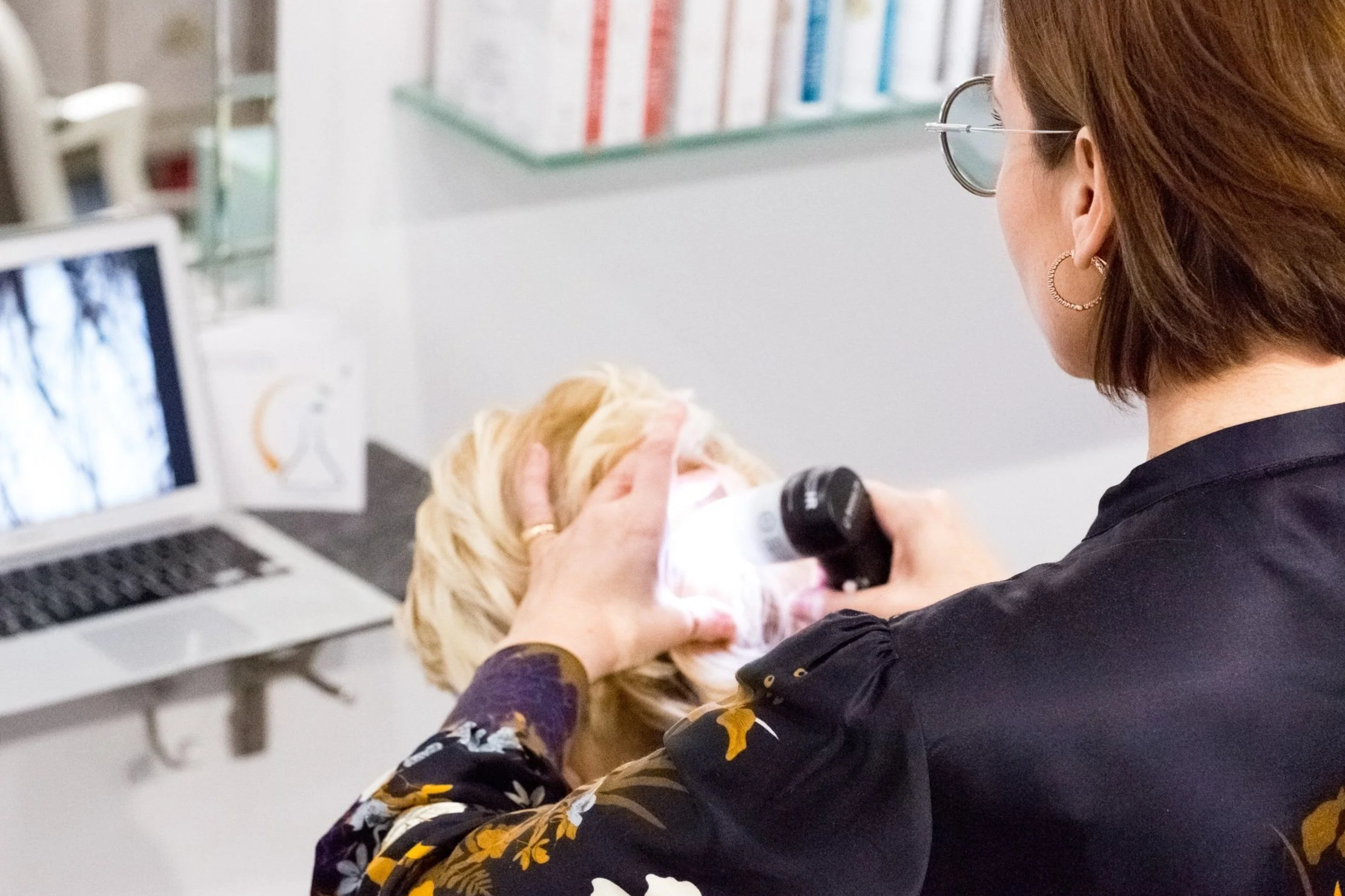
If you’re considering working with a trichologist, chances are you’ve already tried something, like a product, a supplement, a trend, a promise that sounded hopeful but didn’t deliver. By the time most people seek trichology care, they’re looking for clarity, honesty, and a plan that actually makes sense for their scalp and hair.
That’s where a scalp analysis comes in. In my practice at Penny James Trichology Center in New York City, a scalp analysis is the foundation of ethical, effective trichology care. Understanding what it is (and what it isn’t) is key to setting realistic expectations from the start. It’s important that clients are aware that there is no fix-it-all method for hair and scalp conditions, and there are many factors that come into play for how someone can achieve the results they desire.
My goal is to ensure clients get the honest truth and are not sold on a product and a dream. Let’s break down what you can expect from a trichology visit with me.
What Is a Scalp Analysis and Why It Matters
A scalp analysis is a comprehensive evaluation of the scalp environment and hair follicles, designed to replace assumptions with evidence. Using a dermatoscope, clinical observation, and a review of health, lifestyle, and hair history, I assess the condition of the scalp, follicle health, and visible patterns of shedding or loss.
Through this process, I’m able to evaluate key factors such as:
inflammation or irritation
follicle density
sebum levels and buildup
signs of active hair loss
environmental or mechanical stressors
Remember, the scalp is living tissue, influenced by hormones, circulation, nutrition, stress, genetics, and daily habits. Without a scalp analysis, recommendations are largely guesswork. With one, treatment decisions are grounded in observation, not assumption.
A proper scalp analysis also protects clients from unrealistic promises and allows me to practice trichology ethically and responsibly. Most importantly, it gives clients clear, evidence-based insight into what’s happening on their scalp and what their realistic options are moving forward.
Hair and scalp conditions can be deeply emotional. A scalp analysis replaces fear with facts. From there, we can have an honest conversation about what’s possible, what will take time, and what outcomes make sense for your scalp before any treatment plan is ever discussed.

Trichology Is Investigative, Not Instant
One of the biggest misconceptions about trichology is that it offers quick fixes or guaranteed regrowth. In reality, trichology is investigative and corrective, not cosmetic or immediate.
A scalp analysis helps identify why hair loss or scalp imbalance is occurring, but it doesn’t promise overnight results. Hair grows in cycles, and meaningful change takes time, often months, not weeks. This is where honesty matters.
A trichologist’s role is not to sell hope without context, but to create a realistic, evidence-based plan rooted in what your scalp can actually respond to. I will never sugar-coat my findings. I will be gentle in giving you the facts.
Lifestyle and Nutrition: Helpful, but Not a Cure-All
Lifestyle and nutrition play an important role in scalp and hair health, but only under specific circumstances.
If hair loss is related to:
Nutrient deficiencies (iron, vitamin D, B12, zinc)
Chronic stress or cortisol dysregulation
Inflammation linked to diet or gut health
…then addressing these areas can support improved hair retention and healthier growth.
However, it’s important to be clear: Lifestyle changes alone will not reverse genetic hair loss.
A scalp analysis helps determine whether nutrition and lifestyle are primary contributors or supportive tools within a larger treatment plan. This distinction prevents wasted time, money, and frustration.
Genetics vs. Modifiable Factors
Some forms of hair loss—such as androgenetic alopecia—are genetically driven. While trichology care can often slow progression, reduce inflammation, and support follicle longevity, it cannot override genetics entirely.
That doesn’t mean treatment isn’t worthwhile. It means expectations must be aligned with reality.
A scalp analysis helps determine:
Whether follicles are still viable
The degree of miniaturization present
How responsive the scalp may be to intervention
From there, the goal becomes preservation, stabilization, and strategic improvement, rather than unrealistic promises of full reversal.
Using Hair & Scalp Products Is Not One-Size-Fits-All
At my trichology center, I only use and recommend products that are backed by scientific research and developed by top specialists in the field. I focus on ingredients that are clean, healthy, and natural, without using harsh chemicals that might do more harm than good. I will never offer a product I would not use myself, and for which I have not seen the proof of results.
With that being said, everyone’s hair and scalp microbiome is different. Between that and varying conditions, not all products will work for all clients. The people who come into my office must know this, as trichology is deeply personal in terms of each client needing different things, even if their conditions appear to be the same.
That’s why I am keen on creating personalized treatment plans for each individual, not one general care plan for all. You will never feel like “just another client” in my office, but a unique individual with their own unique needs.

The Role of Consistency and Time
Trichology is not a one-visit process. A scalp analysis provides a starting point, but progress depends on consistency, including following protocols, adjusting routines, and reassessing the scalp over time.
Hair growth cycles typically last several months, which means results are gradual. Many clients begin to notice changes in shedding patterns, scalp comfort, or density before visible regrowth appears.
This is why follow-up scalp analysis appointments are so important. They allow progress to be measured objectively, not emotionally.
A Very Honest Summary of Outcomes
Let’s be clear about what trichology can—and cannot—do.
Best-case realistic outcome: Hair shedding stabilizes, scalp health improves, some density is regained, and you maintain what you have long-term.
Worst-case outcome (with treatment): Hair loss slows, inflammation is reduced, scalp health improves, but regrowth is minimal.
Worst-case outcome (without treatment): Hair loss continues gradually, often becoming more difficult to manage over time.
None of these outcomes are failures. They are simply different responses based on biology, timing, and consistency.
Trichology isn’t about selling miracles. It’s about understanding the scalp as living tissue, respecting biological limits, and working within them thoughtfully.
If you’re seeking answers, honesty, and a plan rooted in science and whole-body health, a scalp analysis is the first—and most important—step because informed expectations don’t just lead to better results. They lead to better relationships with your hair, your scalp, and your long-term health.
As a double board-certified trichologist with decades of experience as a master stylist, I combine beauty and science to offer my clients personalized, holistic plans that work for their body, mind, and lifestyle.
Book a scalp analysis and let’s join forces to change the way you take care of your hair and scalp.
Copyright 2026 © Penny James Trichology Center
