
Your Hair Follicles Are Talking to You: What They’re Trying to Tell You About Hair Loss
Lately, it seems like everyone is asking me about hair follicles. I suspect social media has something to do with it, and honestly, I'm glad.
For years, most conversations about hair loss have focused on the hair we can actually see. We obsess over shedding, thinning, and products that promise thicker hair, but very few people stop to think about the tiny structures beneath the scalp that determine whether that hair grows in the first place.
As a double board-certified trichologist, I am proud to say I am part of the 2026 EBHF Fellowship. This puts me in a different league.
While I love seeing more people become curious about scalp health, there's also a great deal of misinformation circulating online. Hair follicles are incredibly complex living structures, and understanding them requires much more than a 60-second video. My hope is that by the end of this article, you'll have a clearer understanding of what's happening beneath your scalp, and why your follicles may be trying to tell you something. I am going to make this very simple.
What Exactly Is a Hair Follicle?
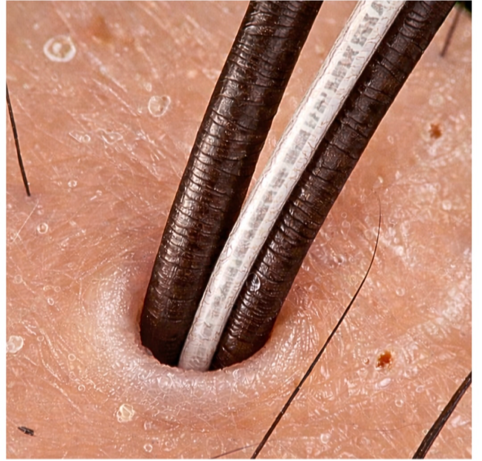
Despite hearing the term all the time, most people couldn't tell you what a hair follicle actually is. A hair follicle is part of your skin that is responsible for growing your hair. Did you know there are over 100,000 follicles on your scalp?
Pulling a hair out, you may see a little white bulb, which indicates the removal of the root rather than the follicle itself, meaning that both the root and hair will naturally regenerate; however, you should consult with a Trichologist like myself if you observe persistent hair loss.
Think of your hair like a flower. The strand you see is the bloom, but the follicle is the root system beneath the soil. You can water the flower all you want, but if the roots aren't healthy, the flower will never thrive.
Hair follicles are living structures supplied by blood vessels, nerve endings, oil glands, sweat glands, the arrector pili muscle that anchors 2, 3, or 4 hairs per follicle, stem cells, and the BIG boss, the dermal papilla and specialized cells that work together to grow healthy hair. They respond to hormones, nutrition, stress, inflammation, aging, and your overall health. In many ways, your follicles are constantly communicating what is happening inside your body. Here is a fun fact: our hair follicles can taste and smell. WOW, so much going on!
Your Hair Follicles Are Always Working
One of the biggest misconceptions about hair growth is that follicles are either "on" or "off." In reality, every follicle moves through a continuous cycle of:
Growing
Slowing down
Resting
Falling out
Growing again
The active growth stage is called anagen, followed by a short transition stage (catagen), then a resting phase (telogen) before the hair naturally sheds and the cycle begins again. Problems arise when follicles remain in the resting phase longer than they should or become unable to return to healthy growth.
Why Do Hair Follicles Become Dormant?
Hair follicles don't simply stop working for no reason. They respond to what's happening both inside and outside the body.
Hormones: More Than Just DHT
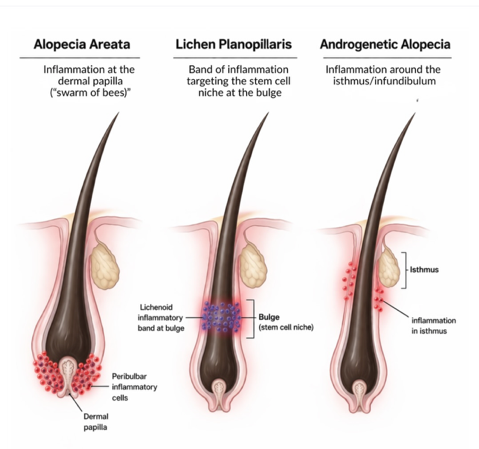
For most people experiencing pattern hair loss, the biggest culprit is sensitivity to dihydrotestosterone (DHT). Over time, DHT causes susceptible follicles to become progressively smaller, a process called miniaturization. With each growth cycle, the follicle produces finer, weaker hairs until it may eventually stop producing visible hair altogether.
For many years, DHT was considered the entire story. Today, researchers understand it is only one piece of a much larger puzzle. Hair follicle researcher Dr. Ralf Paus and others have shown that inflammation, oxidative stress, immune signaling, the scalp microbiome, and cellular aging all influence follicle health. In other words, hair loss is rarely caused by just one factor. Understanding the complete picture allows for more personalized care.
Stress Can Put Hair Into Hibernation
Stress is another powerful influence on the hair cycle. A major illness, surgery, childbirth, rapid weight loss, emotional trauma, or prolonged anxiety can push large numbers of follicles into the resting phase all at once. This condition is known as telogen effluvium.
One of the most surprising things about telogen effluvium is that the shedding usually doesn't begin immediately. Instead, it often starts two to three months after the stressful event because the follicles must first complete their resting phase before releasing the hair.
Many people never connect the two events. That's why understanding your personal timeline is so important when investigating hair loss.
Your Follicles Need Fuel
I often tell clients that hair follicles are like tiny factories. Factories cannot produce without raw materials. Your follicles rely on nutrients like:
Iron (ferritin)
Vitamin D
Zinc
Vitamin B12
Protein
When those building blocks are lacking—or when conditions like thyroid disorders slow the body's metabolism—hair production becomes a lower priority. Your body will always protect essential organs before it prioritizes growing hair.
Sometimes the Immune System Gets It Wrong
In alopecia areata, the immune system mistakenly attacks healthy hair follicles. Here's what many people don't realize: The follicle isn't necessarily dead. It's hiding.
The follicle often remains alive beneath the skin but temporarily stops producing hair because of inflammatory signals surrounding it. This is why many people with alopecia areata can experience regrowth after receiving appropriate medical treatment.
Aging Changes the Follicle Too
Hair follicles don't suddenly become "old." Instead, they gradually become slower. Cell turnover decreases. Blood flow changes. Inflammation may increase. Growth cycles become shorter, and the resting phase lasts longer.
These changes are a natural part of aging, but they don't mean healthy hair is no longer possible. They simply mean the follicles may require more support than they once did.
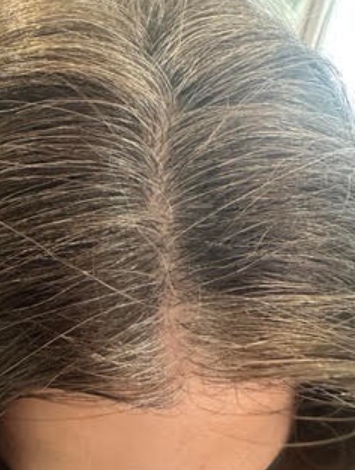
Can Dormant Hair Follicles Wake Up Again?
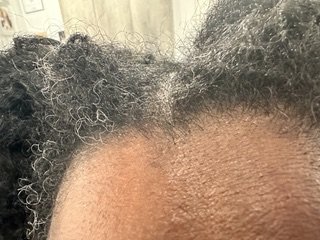
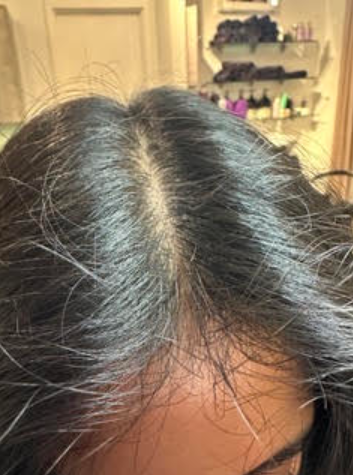
This is probably the question I'm asked most often. The answer is: Yes, but it depends on why they're dormant. Or is it follicular Odessa?
If a follicle is resting because of stress, nutritional deficiencies, or certain temporary conditions, it may resume healthy growth once the underlying issue has been addressed. If a follicle has become miniaturized from androgenetic alopecia, early treatment may help preserve or improve its function.
However, if a follicle has been permanently destroyed by a scarring form of alopecia, it cannot regenerate because the follicular structure has been replaced by scar tissue. This is exactly why identifying the cause of hair loss early is so important.
This Is Why I Never Look Only at the Hair
As an advanced trichologist, my job isn't simply to recommend products. My job is to understand why your follicles are behaving the way they are. Every consultation begins with a comprehensive scalp analysis using a dermatoscope to closely examine your scalp, follicles, and hair density. But that's only part of the picture.
We also discuss your health history, stress levels, medications, nutrition, family history, hair care routine, chemical services, and lifestyle. If you've recently had bloodwork done, we'll review that too. Every follicle has a story. Some are hormonally sensitive. Some are inflamed. Some are lacking nutrients. Some are simply resting longer than they should. The goal isn't to guess which one yours is. The goal is to find out.
Once we understand the root cause, we can develop a personalized plan to support your scalp and hair health. In some cases, that means topical therapies and scalp treatments. In others, it means working alongside your physician or dermatologist if medical treatment is needed. Trichology is about understanding the whole picture, not chasing trends or quick fixes.
Hair loss doesn't begin when you notice more strands in your brush. It often begins months—or even years—earlier, deep inside the hair follicle. That's why understanding your follicles is one of the most powerful things you can do for your hair.
The sooner you understand what your follicles are telling you, the sooner you can take meaningful action to protect the hair you have and support healthier growth moving forward. Your hair follicles are always communicating with you. The question is: are you listening?

Copyright 2026 © Penny James Trichology Center