
Why Does My Scalp Feel Like It’s Burning? A Trichologist Explains
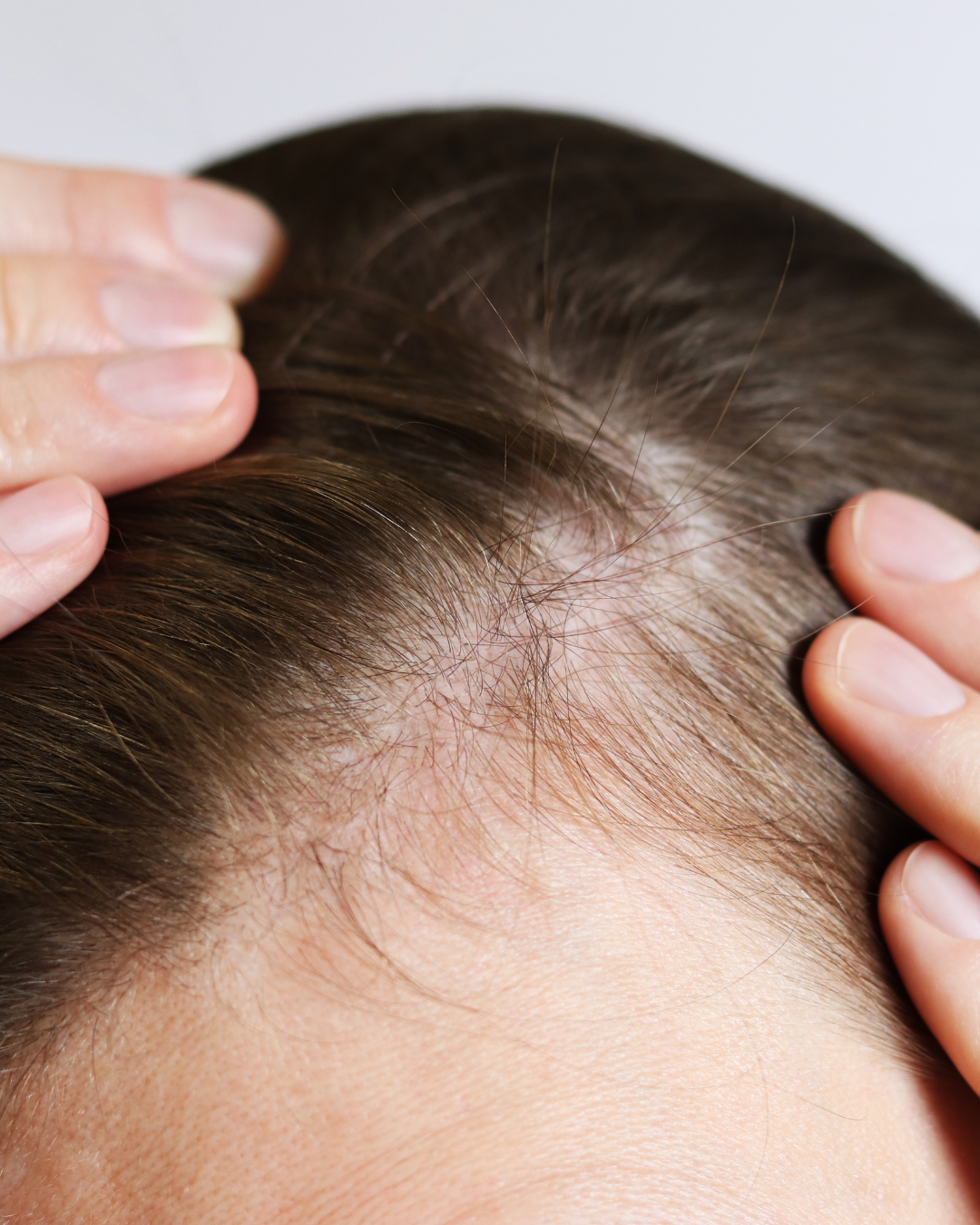
If you’ve ever typed “why does my scalp feel like it’s burning?” into Google, you’re not alone. Variations of that question, whether it’s burning scalp, how to stop scalp burning, scalp pain or tingling, are searched for every day by people trying to make sense of a sensation that feels alarming, uncomfortable, and often unexplained.
What I want you to understand from the beginning is that a burning scalp is not a random occurrence. It is a signal. And in trichology, signals matter.
In many cases, that sensation is dismissed as dryness, product irritation, or stress. Sometimes it is those things. But just as often, it is the earliest indication that something more complex is happening within the scalp that requires proper evaluation, not guesswork.
Understanding the Burning Sensation on the Scalp: What Is Actually Happening?
When a client describes a burning scalp, they are usually referring to a combination of sensations: heat, tingling, tenderness, stinging, or even pain when the scalp is touched. Clinically, we often refer to this as trichodynia or scalp dysesthesia. These are terms used to describe discomfort or pain in the scalp that may or may not be accompanied by visible signs.
What makes this particularly challenging is that the scalp is a highly innervated and vascularized environment. In simple terms, it is rich in nerve endings and blood supply. That means even subtle disruptions, whether inflammatory, neurological, or chemical, can produce very real, very uncomfortable sensations.
This is why a burning scalp should never be dismissed simply because it “doesn’t look that bad.”

The Most Common Causes of a Burning Scalp
A burning sensation is a symptom, not a diagnosis. From a trichological perspective, we look at several possible root causes, often overlapping rather than existing in isolation. Here are five such possibilities:
1. Inflammatory scalp conditions are one of the most common contributors. Disorders such as seborrheic dermatitis, psoriasis, or folliculitis create an inflammatory response in the skin. This inflammation can manifest not only as flaking or redness, but also as burning, itching scalp, and sensitivity. In the early stages, these conditions are frequently mistaken for simple dandruff, which delays appropriate treatment.
2. Another important category is scalp dysesthesia (trichodynia), which is more neurologically driven. In these cases, the scalp may appear relatively normal, yet the individual experiences significant discomfort. This can be associated with chronic muscle tension in the scalp, heightened nerve sensitivity, or prolonged periods of emotional stress. Keep in mind that the mind and body are not separate systems. What you are experiencing physically can absolutely be influenced by what you are carrying mentally.
3. Chemical damage and allergic reactions are also extremely common in my practice. Hair color, relaxers, keratin treatments, and even everyday products can compromise the scalp barrier. When that barrier is disrupted, the skin becomes more permeable and reactive, leading to burning, irritation, and inflammation. In some cases, this is a mild irritant response. In others, it is a true allergic reaction that requires immediate intervention.
4. There are also neurological causes to consider, though less frequently. Conditions such as neuropathy, post-viral nerve sensitivity (including shingles), or vascular conditions like giant cell arteritis can present with burning or painful sensations in the scalp. While these are not the most common causes, they are part of why persistent symptoms should never be ignored or self-diagnosed.
And then there is stress, which is the factor people often underestimate. Chronic stress can increase inflammatory markers in the body, disrupt the hair growth cycle, and heighten nerve sensitivity. I have seen many clients whose scalp symptoms improved significantly once both the physical and emotional components were addressed together.
When a Burning Scalp Is a Warning Sign
Here is where I want you to pay close attention. A burning scalp can, in some cases, be an early indicator of scarring alopecia (cicatricial alopecia), which is a group of inflammatory conditions that permanently destroy hair follicles.
What makes this particularly concerning is that scarring alopecia rarely begins with obvious hair loss. Instead, it often starts with subtle, easily overlooked signs:
Burning or stinging sensations
Persistent itching
Tenderness or tightness in the crown area
Redness around hair follicles (perifollicular erythema)
Scaling that resembles dandruff (follicular hyperkeratosis)
These symptoms can persist for months—or even years—before noticeable hair loss occurs. By the time the follicular openings (the tiny pores where hair grows) disappear, the damage is already permanent.
From a clinical standpoint, the underlying pathology involves an immune-mediated attack on the follicular bulge, where hair stem cells reside. Once these stem cells are replaced with fibrotic (scar) tissue, hair regeneration is no longer possible. This is why early detection is everything.
In fact, research shows that certain types of scarring alopecia—particularly central centrifugal cicatricial alopecia (CCCA)—are underdiagnosed, with patients often waiting far too long to get to the doctor and experiencing symptoms long before receiving answers. During that time, the disease continues to progress.
What Should You Do If Your Scalp Is Burning?
If you are experiencing ongoing scalp discomfort, the most important thing you can do is stop guessing and start investigating. A burning scalp is not something to manage indefinitely with trial-and-error.
The first step is to seek evaluation from a qualified professional, like a board-certified trichologist who specializes in hair and scalp disorders. In my practice, I assess not just the visible condition of the scalp, but also the underlying patterns, like signs of inflammation, follicular changes, and potential early indicators of disease.
We do an in-depth scalp analysis using top technology, including my dermatoscope, to look closely at the scalp and hair follicles. We also have in-depth discussions about your lifestyle, including stress’s impact on your hair, how diet and nutrition affect your scalp health, hair-washing and styling routines, hair products, and what hair color you use. You can even bring in your most recent bloodwork from your primary care physician for us to go over as well. All of this is done in a private, safe environment where you can feel comfortable sharing.
From there, the goal is to rule out or confirm a diagnosis. Is this inflammatory? Neurological? Product-related? Or something more progressive? For conditions like scarring alopecia, I recommend that you get a biopsy. I work closely with leading specialists in New York City to ensure my clients receive appropriate care when needed. I also work closely with the Scarring Alopecia Organization. This collaborative approach allows us to address both the medical and structural aspects of scalp health and offer support groups.
Once a diagnosis is established, supportive treatments will be introduced. Medication via the dermatologist. * If you are under a dermatologist's care, I step in to work with the hair you have now. I do not change medical treatments; they are critical for scarring alopecia.
These can include topical therapies such as minoxidil or other targeted regrowth solutions designed to support remaining follicles. Scalp creams to relieve itching, antioxidant scalp cream, salicylic acid, and juniper scalp cream. All of these products are used at my trichology center, and are available for you to take home.
But it’s important to understand: these treatments are not a substitute for diagnosis. They are part of a broader, strategic approach.

The Bottom Line about Burning Sensations on the Scalp
My approach to this work is not purely clinical. It is also deeply personal. When I began experiencing a form of hair loss myself, it was not just a physical change. While it was not scarring alopecia, it was emotional, confusing, and at times overwhelming. I wanted answers. I wanted to understand what was happening to my body and how to fix it.
That experience led me to formally study trichology through the International Association of Trichology and the UK’s Institute of Trichologists. Today, as a board-certified trichologist, I combine that education with lived experience. I know what it feels like to sit in uncertainty. And I also know how powerful it is to finally have clarity.
A burning sensation on the scalp is not something to ignore, normalize, or self-diagnose indefinitely. It is your body asking for attention. Sometimes the cause is mild and easily managed. Other times, it is the earliest sign of a condition that, if left untreated, can lead to permanent hair loss. The difference lies in how quickly you respond.
If you have been experiencing burning, itching, tenderness, or unexplained changes in your scalp, take that seriously. Seek answers. Advocate for your health because when it comes to your hair, early action is not just preventative, it is also protective. And you deserve to protect what you still have.
